Métis: Your AI Companion for Audience Insight and Pre-Visit Scenario Testing

Talk with your visitors’ personas to test ideas, refine strategies, and explore new visit scenarios.

At Culture For Causes Network, we believe artificial intelligence should empower museums to understand and serve their audiences more deeply. That’s the vision behind Métis, an intelligent visitor persona platform that transforms audience data into meaningful dialogue. By bringing virtual visitors to life, Métis enables cultural institutions to design experiences that are more insightful, inclusive, and authentically human.

Unlike ChatGPT, Métis is not a general-purpose conversational AI: it is purpose-built for cultural institutions, drawing on your own audience data and a fine-tuned model specifically oriented toward visitor understanding. Where ChatGPT answers broadly, Métis responds with the voice, context, and behavioral logic of your actual publics, making every exchange a mirror of your museum’s living audiences rather than a generic AI conversation.
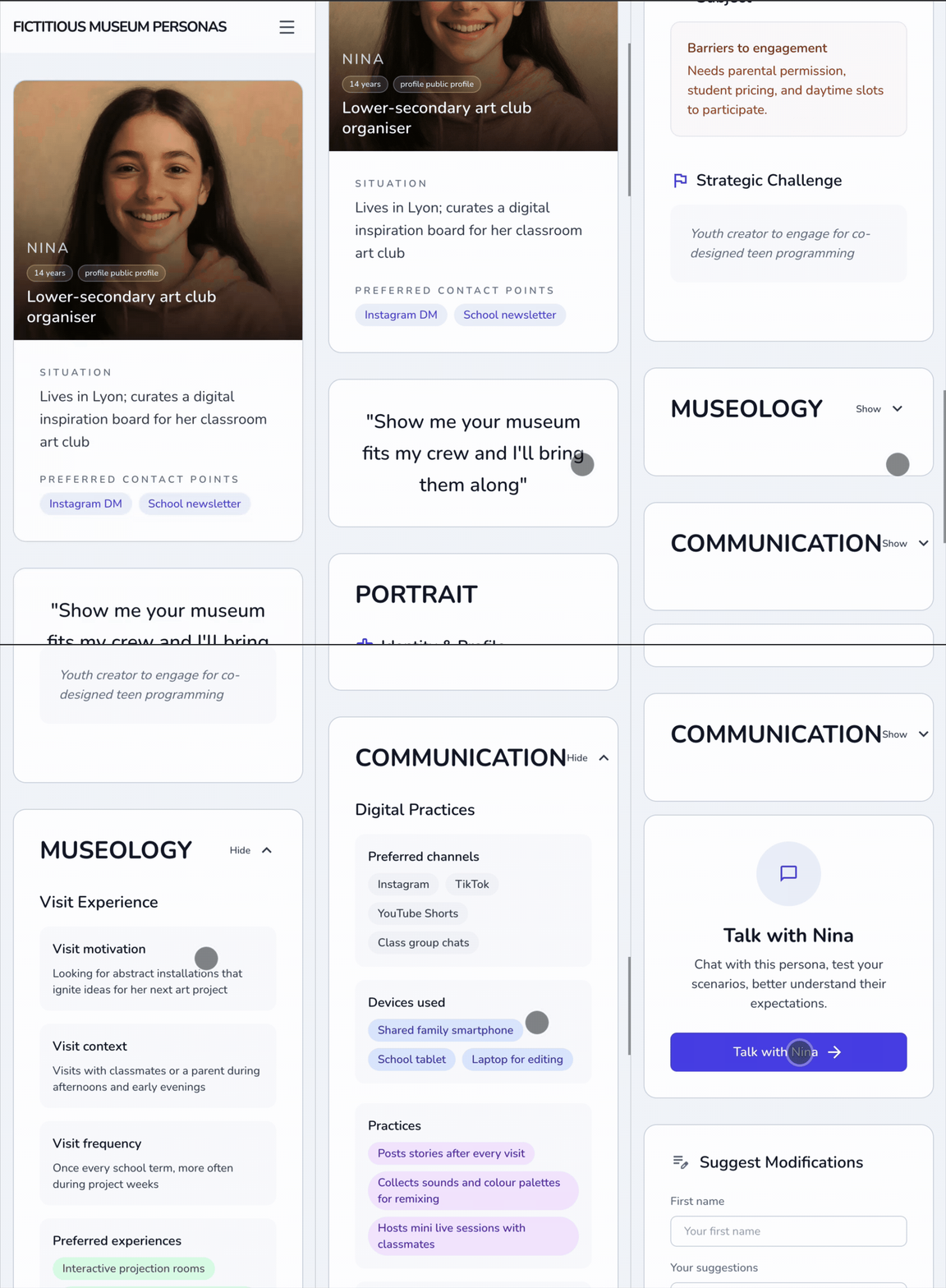
Métis allows museums to generate cohorts of visitor personas from both generic and institution-specific data, producing detailed and dynamic profiles that evolve over time. Each persona is built from a combination of demographic, behavioral, and motivational insights, and can be refined at any moment as new information emerges, such as results from an online or on-site survey. This continuous evolution ensures that museums can regularly reassess and understand visitor expectations, whether physical or digital. Each persona is structured around two main analytical dimensions: museology, which explores relationships to content and learning, and communication, which examines engagement, tone, and interaction channels.


Métis goes far beyond static audience profiling, it allows you to talk directly with your personas, turning them into familiar companions that evolve with your institution. Through natural conversation, you can think with them, challenge your assumptions, and test new ideas. This dialogue-based approach makes it possible to identify false good ideas early, simulate communication campaigns, or evaluate museological strategies before implementation. In this way, Métis helps teams stay aligned with the real expectations and emotions of their audiences, day after day.
Sustainability and Data Sovereignty

Métis has been built with eco-friendly technology at its core:

  • ⚙️ Optimized token usage for reduced energy consumption.
  • 🧠 Local dataset hosting, ensuring that your museum’s data stays within your walls.
  • ☁️ Flexible deployment, allowing installation on your own servers or chosen secure environments.

This means museums can adopt AI tools responsibly, without compromising sustainability, privacy, or sovereignty over their data.

Schedule a demo

Our solution is now available for museums and cultural organizations ready to move beyond static audience studies and embrace a dynamic, data-driven approach to understanding visitors. Become a client today and start creating living personas that speak, react, and inspire, transforming the way your institution listens, designs, and engages.
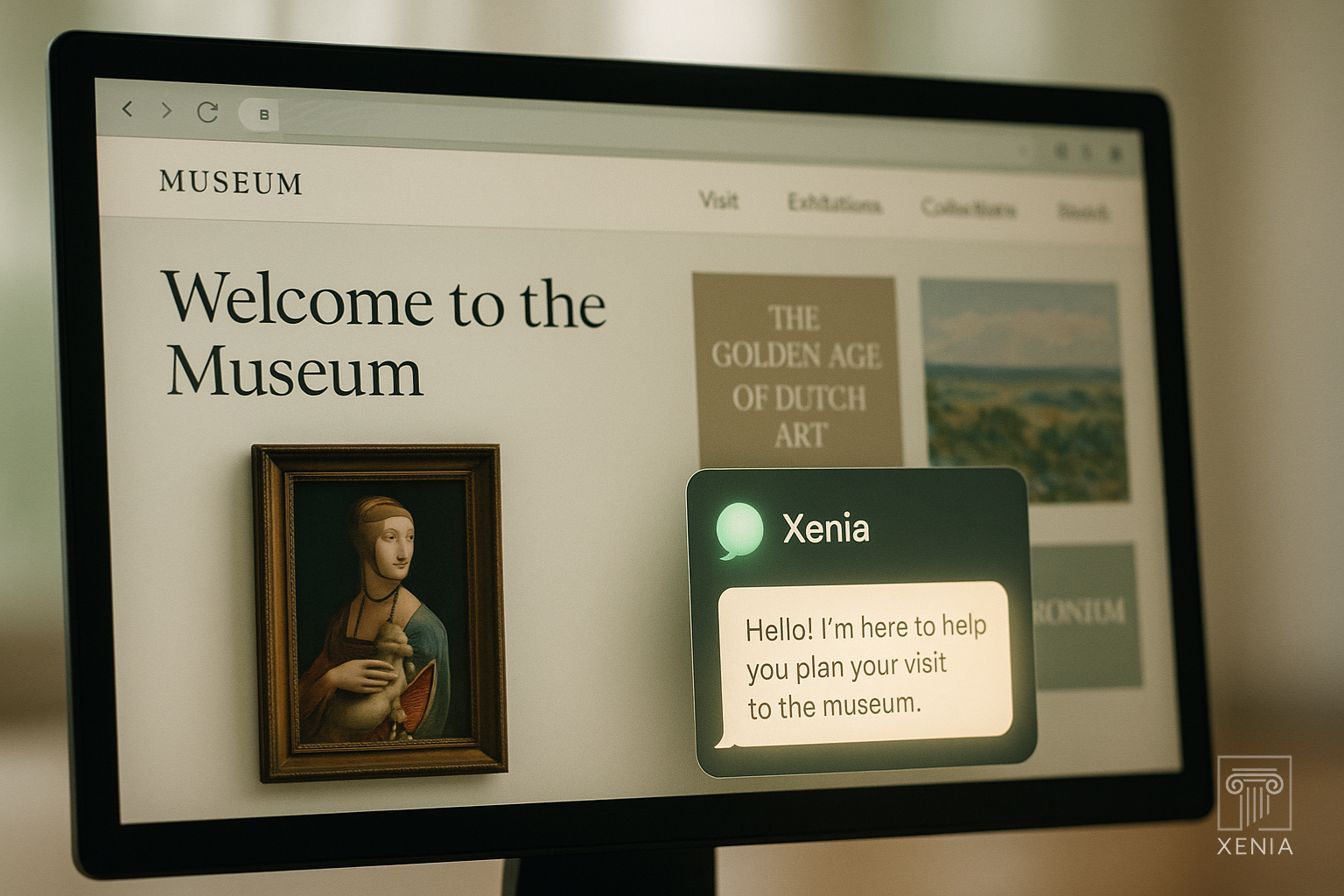
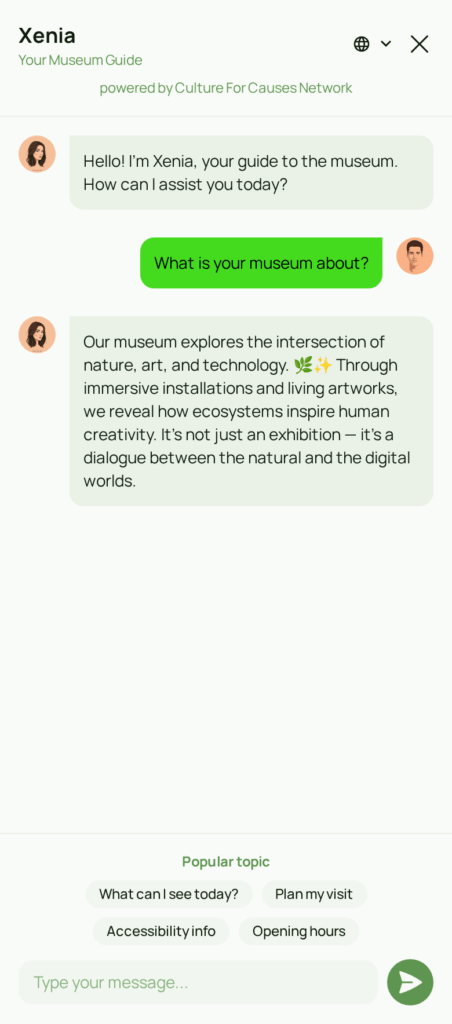
Introducing Xenia: Your Personalized AI Assistant Before Every Museum Visit

Redefining how museums welcome their visitors, even before they arrive

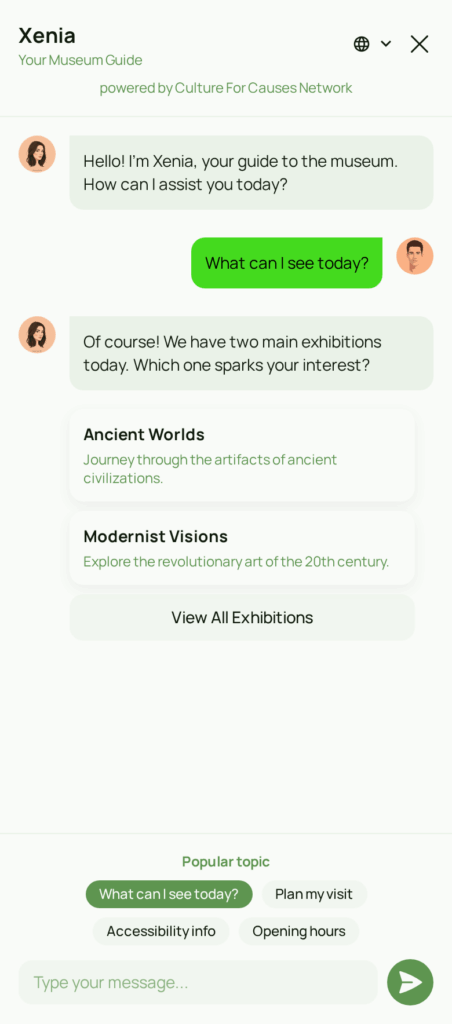
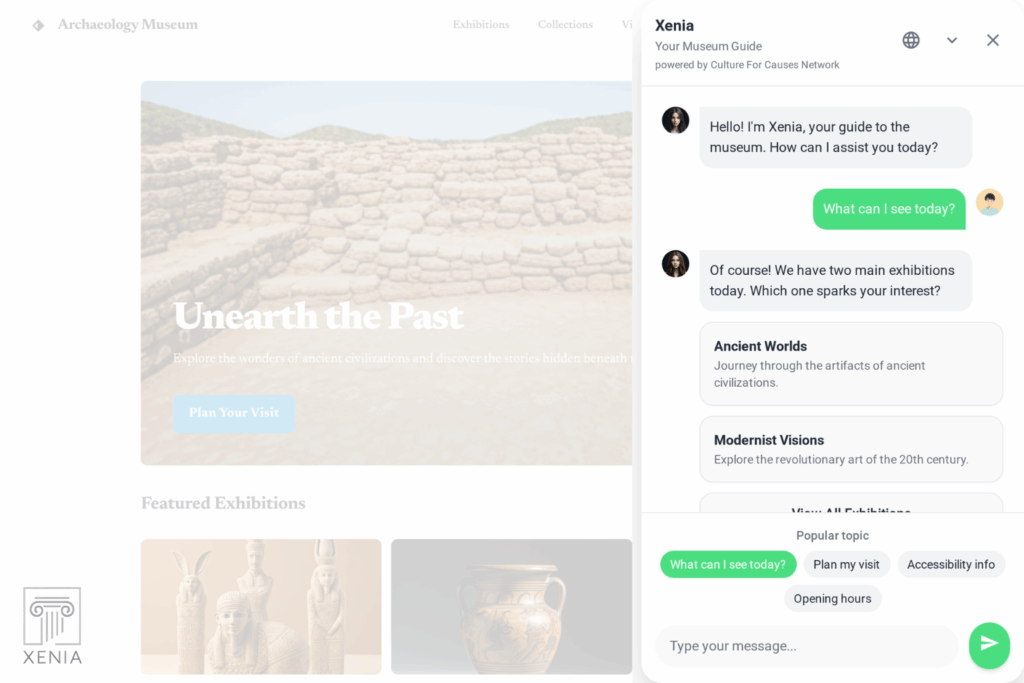
Xenia is an AI-powered companion designed for museum websites. Inspired by the ancient Greek concept of hospitality, it welcomes online visitors, answers their questions, and helps them plan their visit in a warm, accessible, and personalized way.

A Smart Assistant That Knows Your Museum

Xenia works exclusively with your institution’s own data — exhibitions, ticketing, accessibility, events, archives — all curated and controlled by you. It speaks with your voice, ensures accuracy, and strengthens your digital identity.

Trained for Cultural Hospitality

Unlike generic chatbots, Xenia is trained using behavioral data from real visitor interactions and museum communication patterns. It adapts its tone and content to different audiences — families, tourists, educators, professionals — ensuring every user feels understood and welcomed.

Xenia doesn’t just respond — it learns

Its evolving intelligence analyzes conversations and past FAQs to refine its answers and update the “Popular Questions” in real time. This helps your museum anticipate visitor needs and continuously improve the clarity and fluidity of its digital dialogue.

Beyond Q&A: A Dynamic Communication Tool

Xenia can also highlight news, upcoming events, or exhibitions directly within conversations — turning routine questions into opportunities for engagement.

Eco-friendly by design, Xenia optimizes data and energy use, respects privacy, and can be deployed on your own servers or integrated directly into your website.

Sustainability and Data Sovereignty

Xenia has been built with eco-friendly technology at its core:

  • ⚙️ Optimized token usage for reduced energy consumption.
  • 🧠 Local dataset hosting, ensuring that your museum’s data stays within your walls.
  • ☁️ Flexible deployment, allowing installation on your own servers or chosen secure environments.

Join the Beta Program

Xenia is now entering its beta testing phase, and participation is completely free. We’re inviting a limited number of museums and cultural institutions to take part in this unique experimentation phase.

We will only select organizations that are truly committed to exploring how AI can enhance the visitor experience and are willing to share constructive feedback with our team. If your museum values innovation, accessibility, and creative learning, we would love to hear from you.

Why join the beta program?

By joining, your museum will:

  • Test AI-based visitor engagement tools with no development cost, allowing you to evaluate how ready your audiences are for this kind of experience.
  • Get early access to an innovative AI companion designed specifically for museums.
  • Contribute directly to the design of responsible, human-centered AI tools for the cultural sector.
  • Gain visibility as a pioneering institution experimenting with new digital practices (by mutual agreement).
  • Benefit from a preferential framework if you later wish to deploy the solution after the beta phase.

The collaboration remains non-commercial during the beta, but museums that contribute to shaping the prototype will naturally be considered first-tier partners when the tool enters its deployment phase.

Please note that participation requests will be reviewed to ensure a balanced and diverse group of partner institutions. Selection will be based on alignment with the project’s objectives and the museum’s commitment to actively support the beta phase.

Muse Companion: an exploratory prototype for museum visitor engagement

Update, August 29, 2026 — Project status clarification.

This article was first published in October 2025 and described Muse Companion at a conceptual stage. It has been updated to accurately reflect the current status of the project: a laboratory experiment conducted with two partner museums. No public deployment, no commercial version, and no general availability exist at this stage.

Current status

  • Stage: laboratory experimentation
  • Partner institutions: 2
  • Public deployment: none
  • Commercial availability: none
  • Personal data collected: none

A New Way to Experience Museums

At Culture For Causes Network, we explore how technology can bring people closer to culture rather than distract them from it. Muse Companion is an exploratory prototype built to test one question: can an AI-assisted companion make a museum visit more engaging without pulling visitors’ attention onto a screen?

The prototype is currently being tested in a controlled setting with two partner museums. The hypotheses below are what we are testing, not features we are offering.

What Is Muse Companion?


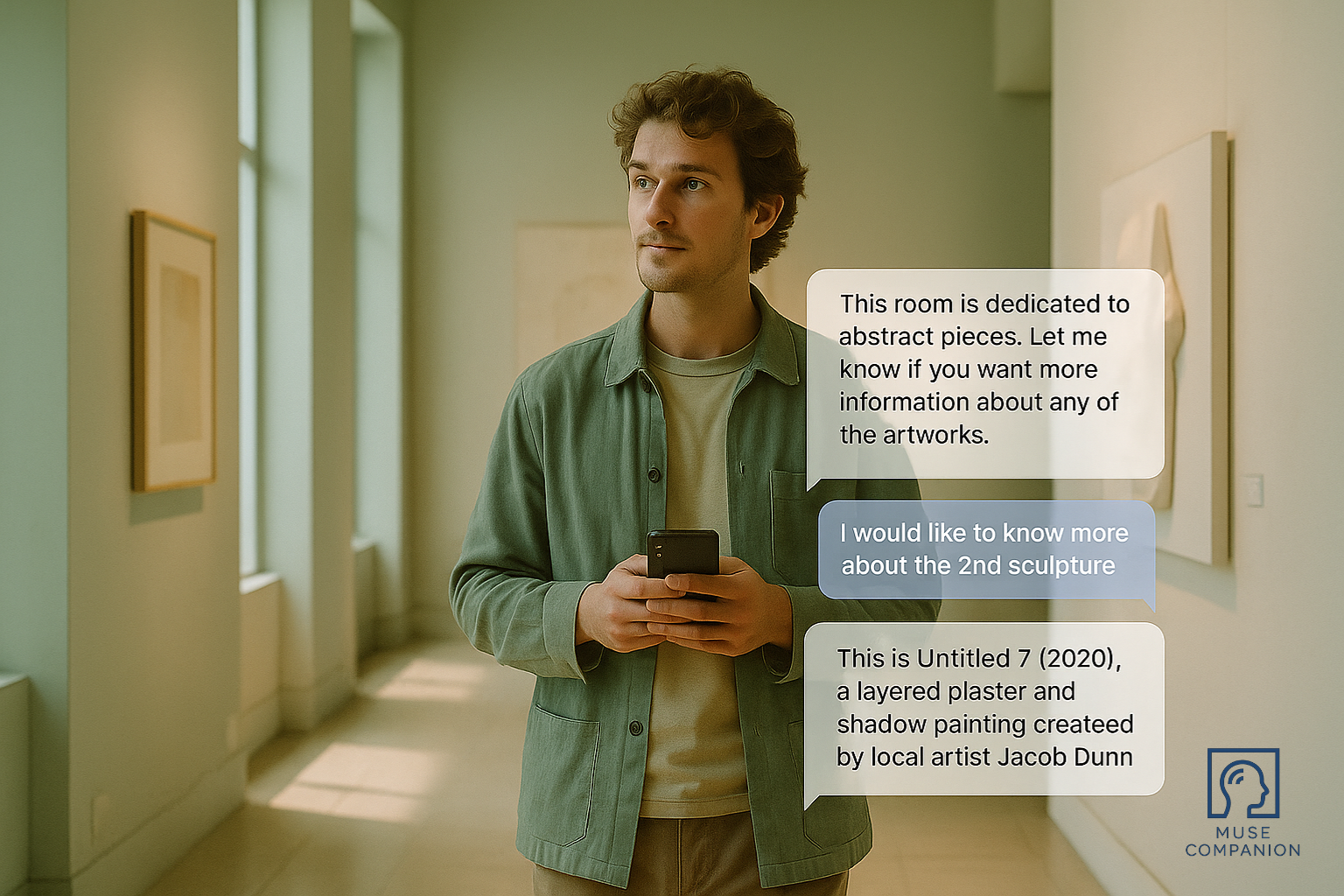
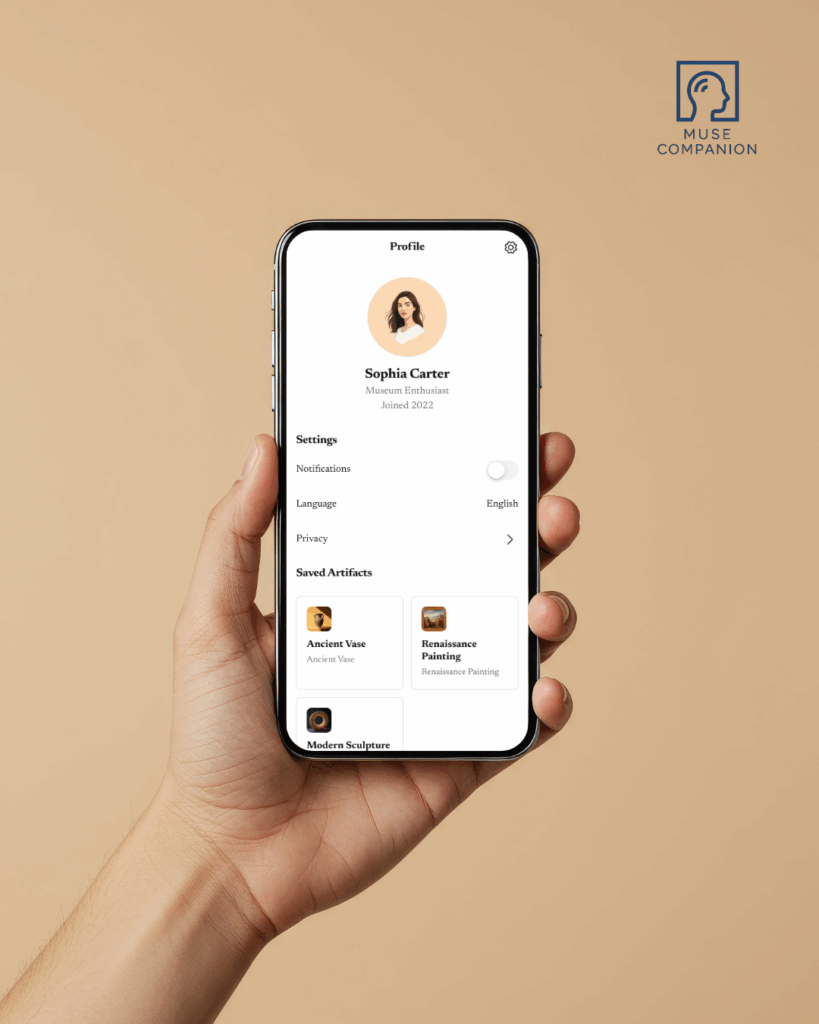
Muse Companion is an AI-powered visitor companion that gamifies learning inside museums.

It accompanies visitors before, during, and after their visit, offering dynamic interactions and stories tailored to each person.

Three interaction models are being evaluated during the experiment:

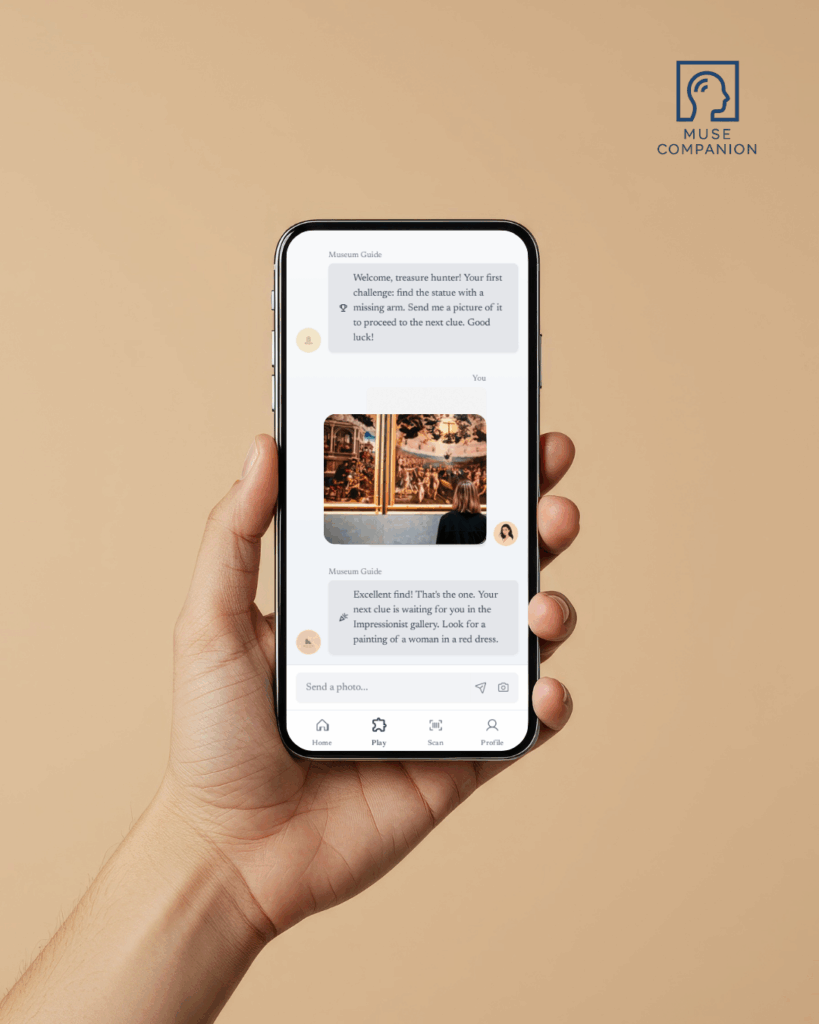
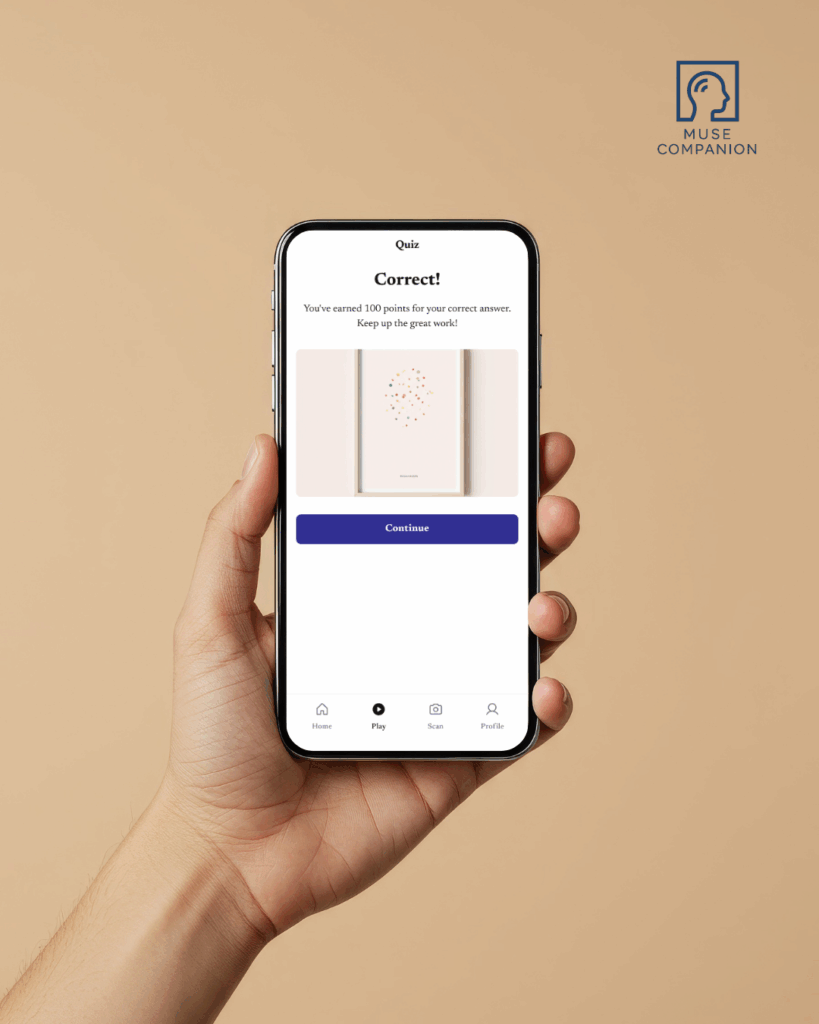
  • Treasure Hunt: does a clue-based path increase time spent observing artworks?
  • Guide Mode: does a route adapted to stated interests improve perceived relevance?
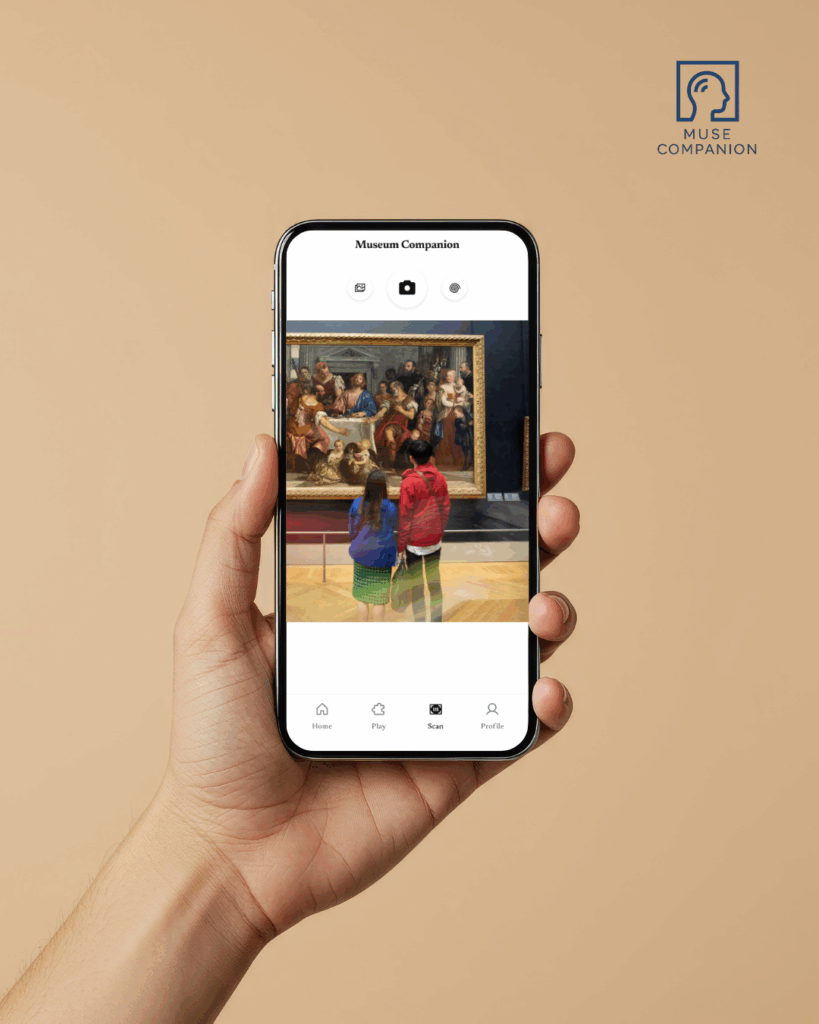
  • Scan Mode: does contextual information delivered on demand support or interrupt the visit?

None of these models is validated at this stage. The purpose of the experiment is to determine which, if any, produce a measurable effect.

Data handling during the experiment

No personal data is collected. No visitor profiling, no behavioural tracking, and no inference of emotional or psychological states is performed.

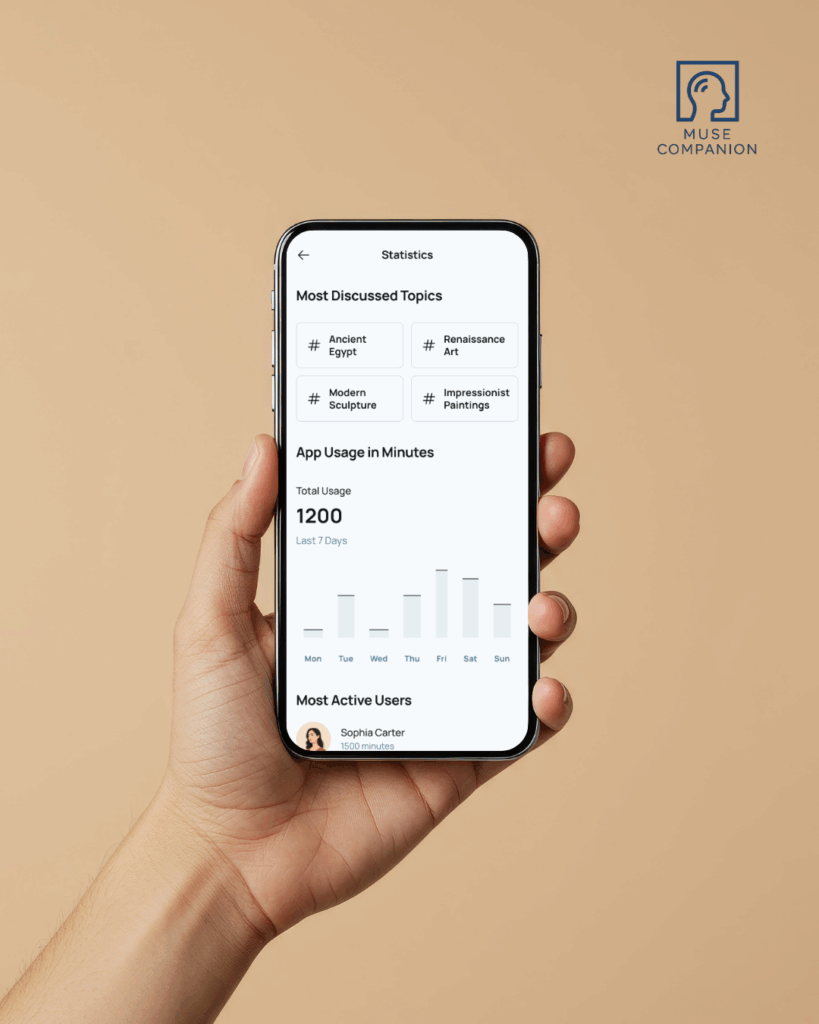
Evaluation relies on protocols agreed with the partner institutions and on aggregate counts that cannot be linked to an individual.

Sustainability and Data Sovereignty

Sustainability and sovereignty: objectives under evaluation

These are design objectives being measured during the experiment, not verified results:

  • Energy sobriety: computational cost per interaction is measured, with the AFNOR SPEC 2314 frugality framework used as the reference for methodology.
  • Data localisation: the prototype is designed so that institutional datasets can remain under the institution’s control.
  • Deployment flexibility: on-premise and institution-chosen hosting are being tested.

Results will be published once the experimentation phase is complete.

Experimentation partners

The experimentation phase is closed. Two partner museums are taking part. We are not currently accepting additional participants and no commercial offer is attached to this project.

Scope

Muse Companion is an independent exploration carried out by Culture For Causes Network. It is not part of, and is not funded by, any application currently under review.